
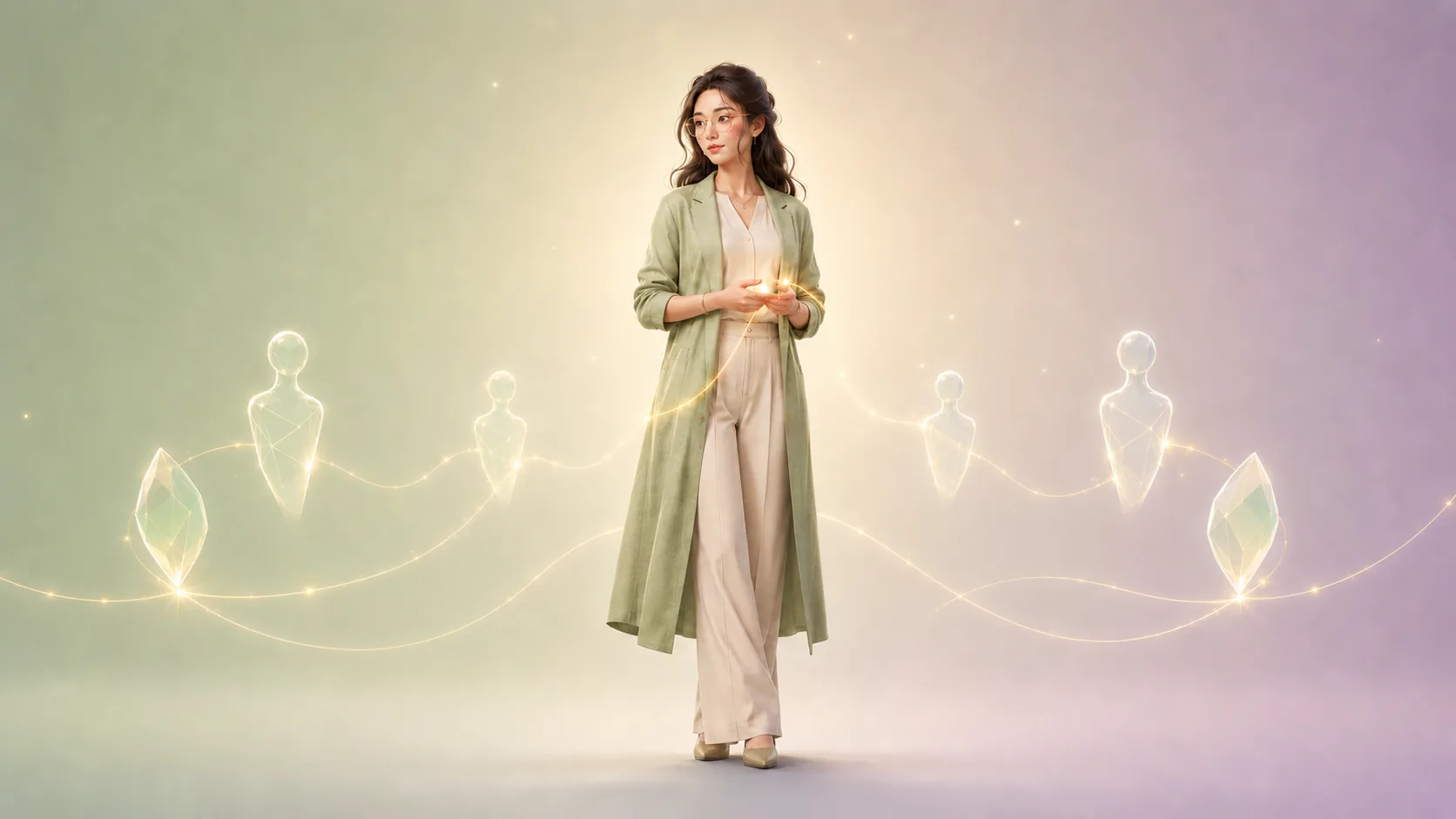
Personality Type

Humanist

Compassionate. Gentle. A safe place to be yourself.

Humanists naturally create emotional safety. People don't feel judged around you. They feel understood.

Social StyleBuilder
Relationship StyleIdealist
ArchetypeDostoevsky
MBTI RefINFJ

You Might Be a Humanist If…

  • People tell you things they've never told anyone.
  • You can feel the temperature of a room the second you walk in.
  • You notice the person on the edge of the group — and quietly make sure they feel seen.
  • You've been the person friends call at 2am — even friends you don't talk to often.
  • You accept people as they are, but you still quietly hope for who they could become.
  • Cruelty — even small, casual cruelty — genuinely hurts you.
  • You'd rather understand someone than win against them.
  • You can hold someone's pain without needing to fix it right away.
  • You've cried over strangers. Over stories. Over things that weren't even about you.
  • You forgive more than most people realize — but you never quite forget.
  • You believe almost everyone is doing their best with what they have.
  • You go home from social events and need hours of silence to recover.

Everyday Humanist

Listening deeper than words

You hear what someone is actually saying underneath the sentence they picked.

People feel heard by you in a way they rarely feel elsewhere.

Believing in people

You see the version of someone they haven't grown into yet — and you treat them like it's already true.

Holding space

You don't rush to fix. You don't rush to advise.

You stay. And that alone changes people.

Accepting without approving

You can love someone without endorsing every choice they make.

That's a rare kind of grace.

Reading the room

The tension nobody named.
The person who went quiet.
The joke that landed wrong.

You catch it all — instantly.

Small acts of care

The check-in text on a hard anniversary. The seat saved next to you.

You love in the details.

Retreating to recharge

Absorbing everyone's feelings is tiring.

You need solitude the way plants need soil.

Processing on paper

Journals. Voice notes. Long walks with your own thoughts.

You have to metabolize the world somewhere.

Feeling art too much

A song, a scene, a line in a book — and you're rearranged for the rest of the day.

Wondering about people long after

The stranger from years ago. The friend who drifted.

You still hope they're okay.

Your Superpower

Helping People Feel Seen

Most people don't feel truly known. They feel managed, tolerated, or performed at.

You're different. You listen the way people wish they were listened to. You notice the softness under the sharp tone, the fear under the anger, the loneliness under the confidence.

You don't try to change anyone. You just make it safe for them to stop pretending — and that alone is often the moment they've been waiting for their whole life.

Your real superpower isn't empathy.
It's the way people exhale around you — and finally get to be themselves.

What Drives You

Compassion

You believe everyone carries something invisible.

So you lead with softness first, always.

Understanding

You'd rather see clearly than be right.

Judgment feels lazy to you. Curiosity feels honest.

Personal Growth

You want to keep becoming — and you want the people you love to become, too.

Characters With Humanist Energy

These characters aren't officially typed.
Many people simply associate them with the same gentleness, deep empathy, and quiet emotional insight often seen in Humanists.

Stylized portrait inspired by Fern

🌿 Fern

Frieren: Beyond Journey's End

  • Gentle
  • Empathic
  • Devoted
Stylized portrait inspired by Atticus Finch

⚖️ Atticus Finch

To Kill a Mockingbird

  • Principled
  • Compassionate
  • Steady
Stylized portrait inspired by Amélie Poulain

✨ Amélie Poulain

Amélie

  • Whimsical
  • Quiet Kindness
  • Observant
Stylized portrait inspired by Mr. Rogers

🧡 Mr. Rogers

Mister Rogers' Neighborhood

  • Warm
  • Accepting
  • Safe
Stylized portrait inspired by Galadriel

🌕 Galadriel

The Lord of the Rings

  • Wise
  • Serene
  • Deep-seeing

Why People Love Humanists

You make people feel safe to be themselves

Around you, people stop editing.

That's rarer than they'll ever say out loud.

You actually listen

Not to reply. Not to fix.

To understand.

You believe in them

Sometimes before they can believe in themselves.

That belief becomes fuel.

You accept complicated feelings

Anger, shame, grief, envy — you don't flinch.

You just make room.

You feel what they can't put into words

People often only realize what they were feeling after you name it gently.

You don't try to change them

You love who they are today — not the improved future version.

You're a soft landing

After the harshness of the world, you feel like a room with the lights turned low.

Why Humanists Drive People Crazy

You absorb everyone's emotions

And then don't know which feelings are actually yours.

You avoid conflict too long

You'd rather quietly reroute around a problem than name it — until it becomes a bigger one.

You over-explain your no

A boundary shouldn't need a five-paragraph justification.

You still write one anyway.

You can be quietly idealistic

You hold people to a version of themselves they haven't earned yet — and get quietly hurt when they fall short.

You disappear when you're overwhelmed

You go radio silent to recover — and people don't always know it isn't personal.

You feel things forever

A comment from three years ago can still visit you at 2am.

What Humanists Often Don't Notice

How much you're carrying

You quietly hold other people's emotions like it's nothing.

It's not nothing.

That not everyone deserves your softness

You give everyone the benefit of the doubt — even people who've clearly shown you who they are.

That silence hurts too

When you withdraw to protect yourself, the people who love you feel it — even if you meant no harm.

How long you replay things

Old conversations. Old expressions.

You've analyzed them more times than anyone realizes.

That you also need holding

You help everyone else exhale.
You rarely let anyone help you exhale.

What Humanists Secretly Need

Someone who notices you first

You spend so much time seeing others.

You need at least one person who sees you without being asked.

Real solitude — without guilt

Alone time isn't selfish for you. It's how you become a person again.

Permission to have hard feelings

Anger. Envy. Resentment.

You're allowed to feel them without becoming a worse person.

Someone who can hold a limit gently

You need people who don't punish you for saying no.

Depth in conversation

Small talk drains you.

One real conversation restores you for a week.

To be believed the first time

When you say you're tired, or hurt, or done — you shouldn't have to prove it.

Softness reflected back

You give it so easily.
You deserve to receive it just as easily.

Humanist in Relationships

Humanists feel most loved when…

  • Someone actually asks how they are — and waits for the real answer.
  • Their softness is treated as strength, not weakness.
  • Their partner protects their alone time without making it feel like rejection.
  • They're seen without having to explain themselves for the hundredth time.
  • They're accepted in their heavy days, not only their bright ones.
  • Someone remembers the small emotional things they mentioned once.
  • They're allowed to feel deeply without being told to "chill out."
  • Their intuition is trusted — even when they can't fully explain it.

Humanists struggle when…

  • Their care is treated as unlimited and free.
  • They're mocked for being "too sensitive."
  • Their partner avoids emotional depth.
  • Conflict turns cruel instead of honest.
  • They're asked to justify every feeling.
  • Their kindness is mistaken for having no limits.
  • They're around someone who never lets them exhale.

Humanist at Work

🚀 Often thrives in

  • Therapy & counseling
  • Teaching & mentoring
  • Writing & storytelling
  • Art, music & creative work
  • Nonprofit & humanitarian work
  • Child development & family support
  • Chaplaincy, coaching & pastoral roles
  • Research on people, culture & meaning
  • Deep 1:1 relational work

📋 Often struggles in

  • Loud, aggressive sales cultures
  • Cutthroat, back-stabbing environments
  • Pure metrics-only cultures with no human care
  • Constant noise with no reflection time
  • Emotionally cold, transactional workplaces
  • Places that punish sensitivity

Growth Path

The next level for most Humanists isn't caring more.

It's learning that your compassion has to include yourself — that your softness isn't a public utility, and that being kind to yourself isn't a betrayal of anyone.

You are allowed to have limits. You're allowed to protect your peace. You're allowed to walk away from people who mistake your gentleness for a doormat. None of that makes you less of who you are.

Your growth isn't about becoming harder.
It's about learning that the world needs you sustainable — and that includes being someone you are also gentle with.

Relationship Dynamics

Humanists often appreciate people who…

  • Ask real questions and actually listen to the answers.
  • Respect their need for quiet without taking it personally.
  • Bring emotional honesty instead of emotional performance.
  • Notice when they're carrying something silently.
  • Are gentle with them the way they're gentle with everyone else.
  • Value depth over noise.
  • Match their tenderness without needing to be asked.

Humanists often struggle with people who…

  • Treat their empathy like an infinite resource.
  • Weaponize honesty as cruelty.
  • Push them to be "less sensitive."
  • Refuse to go beneath the surface.
  • Confuse loudness with confidence.
  • Test their kindness to see where it breaks.
  • Only show up when they need to vent.

Curious who truly deserves a Humanist's heart?

Some personalities meet your depth with equal tenderness. Others bring the steadiness, humor, or gentle courage that helps you feel finally safe to be soft.

Discover which types create the most nourishing partnerships with Humanists — and which ones will keep asking you to shrink your feelings until you disappear.

The Psychology Behind Your Type

How Your Mind Naturally Works

Humanist is based on a personality pattern associated with:

  • Deep empathy and sensitivity to others' emotional states
  • Intuitive reading of subtext, atmosphere, and unspoken feeling
  • Values-driven decision-making anchored in compassion and meaning
  • Preference for depth, sincerity, and one-on-one connection
  • Long inner processing time; discomfort with performative interaction
  • Idealism balanced with a realistic sense of human suffering
  • Tendency to absorb others' emotions and lose track of one's own
  • Difficulty asserting limits without over-explaining or feeling guilty